
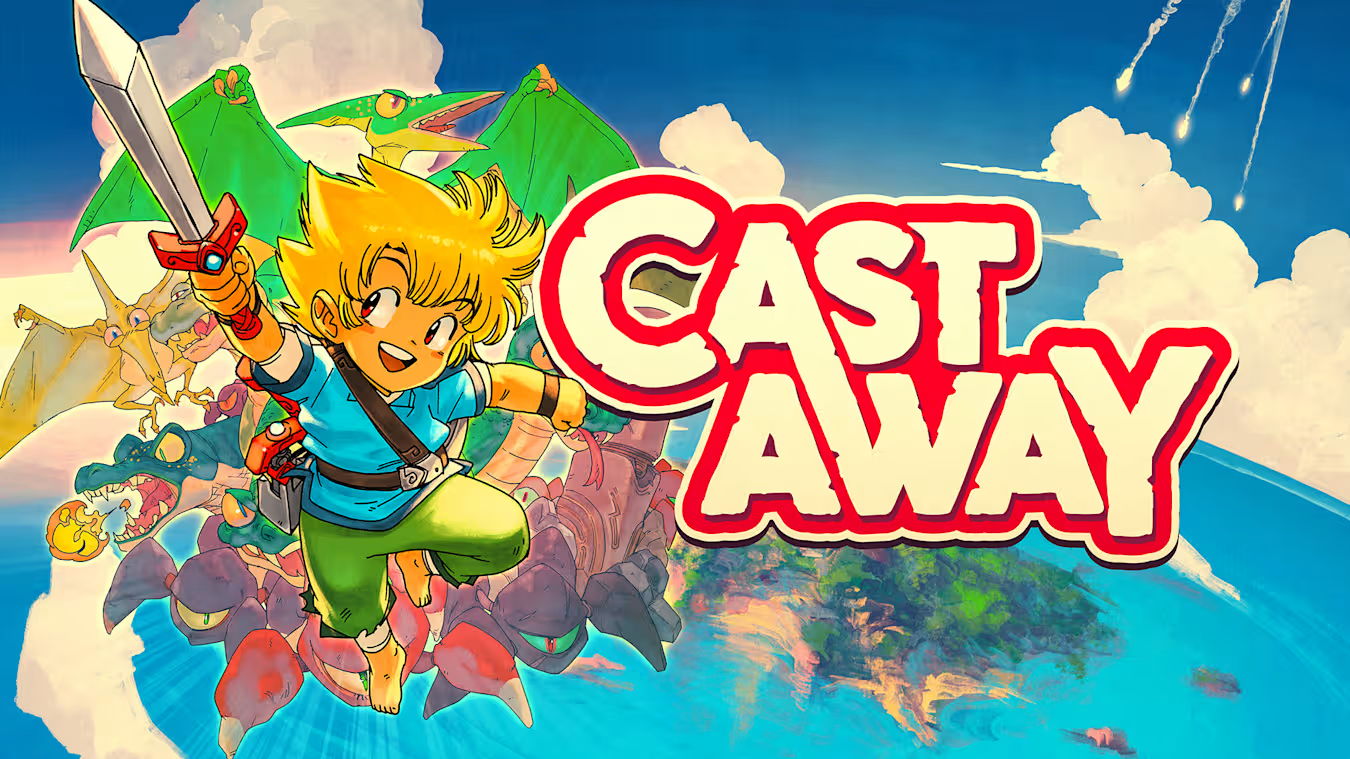
Castaway review
Castaway is a new game from Johan Vinet and his Montreal-based studio, Canari Games. We previously covered their game Lunark, which was an extremely well-crafted cinematic platformer in the vein of Flashback or Another World. Here Vinet is clearly doing an homage to 2D Zelda games in general, and Link’s Awakening DX in particular.
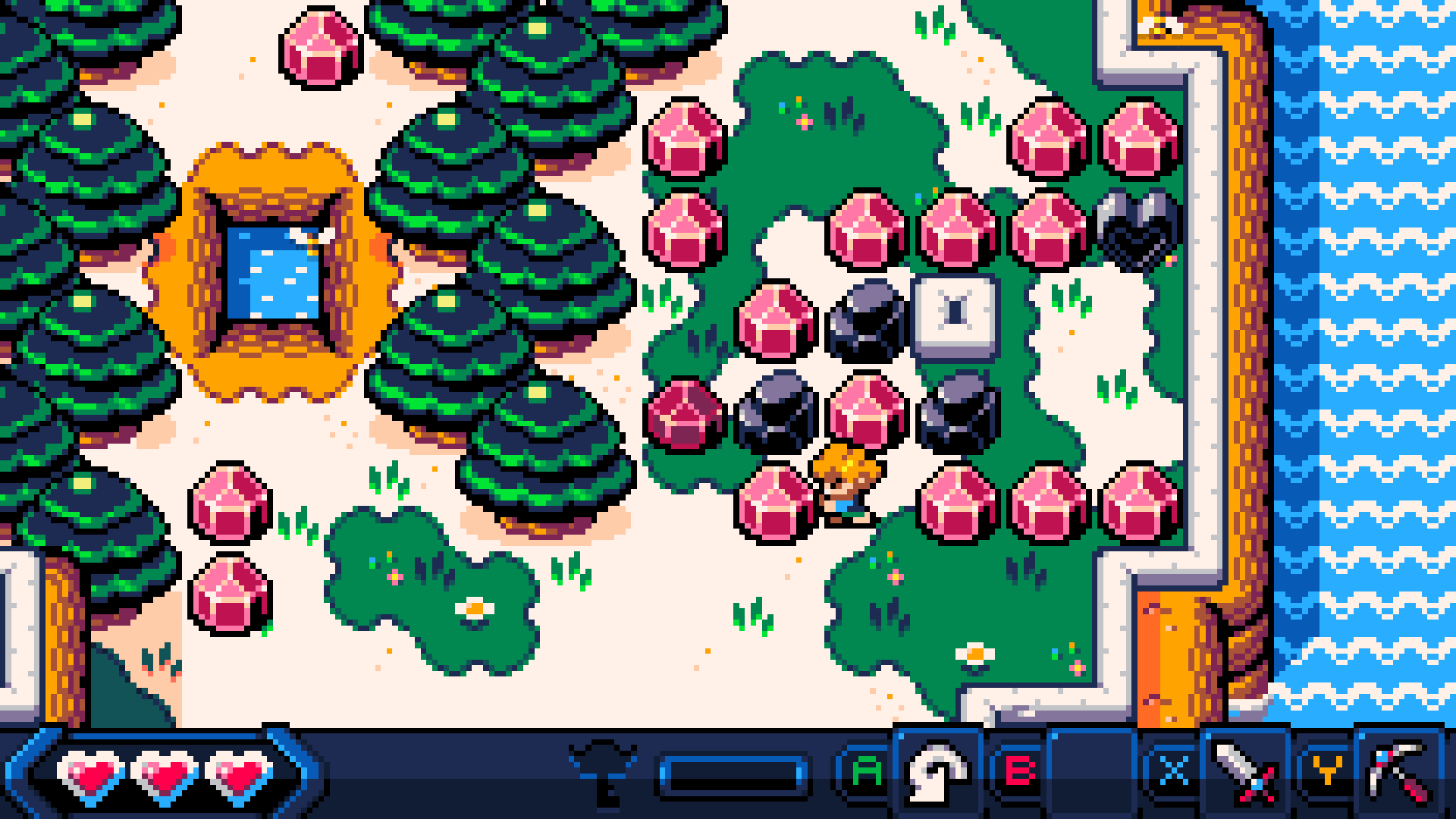
Surprisingly, Castaway appears to be split into two distinct game modes. “The Island” is the standard, Link’s Awakening-style adventure mode I had been expecting. “The Tower”, on the other hand, is a 51-floor dungeon crawl, with randomized power-ups you can acquire along the way. Power-ups are purchased with gold dropped by fallen enemy monsters you can collect. So “The Tower” is kind of a Rogue-lite survival mode to (hopefully) keep players engaged after they’ve completed the regular “Island” game.
And I can understand including something extra beyond the standard adventure mode, because the Island is extremely short.
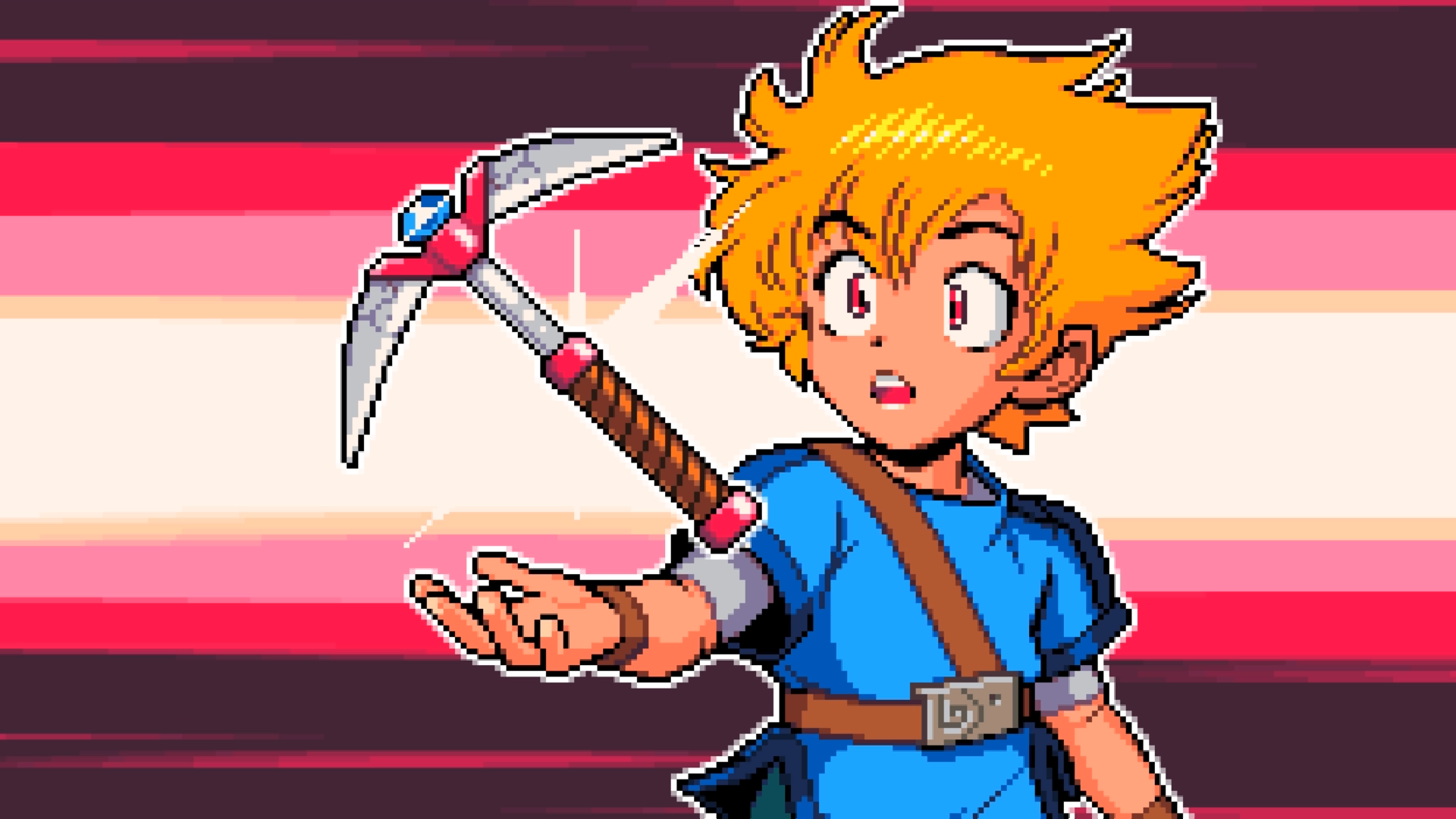
The game has you venturing into caves in order to defeat reptilian bosses and acquire new tools (like any Zelda game) with the ultimate goal of rescuing the princess your dog. However, there are only two tools to acquire—the pickax and the hookshot grappling hook—and the reward for completing the final cave is getting your precious pupper back. So this diminutive island features only three dungeons to conquer in total…and even those dungeons are very brief.
It goes without saying then that Castaway applies an “all killer, no filler” mentality to its design, perhaps to a fault. While personally I can appreciate a short and sweet game experience, I could see some players being disappointed with the extreme brevity of the adventure. The Island only offers the minimum amount of content needed to call itself a complete game. You get the pickax, and then you get the grappling hook, and then…well…that’s it. Castaway is only priced at $7.99 after all, so hopefully players won’t be expecting a sprawling epic.
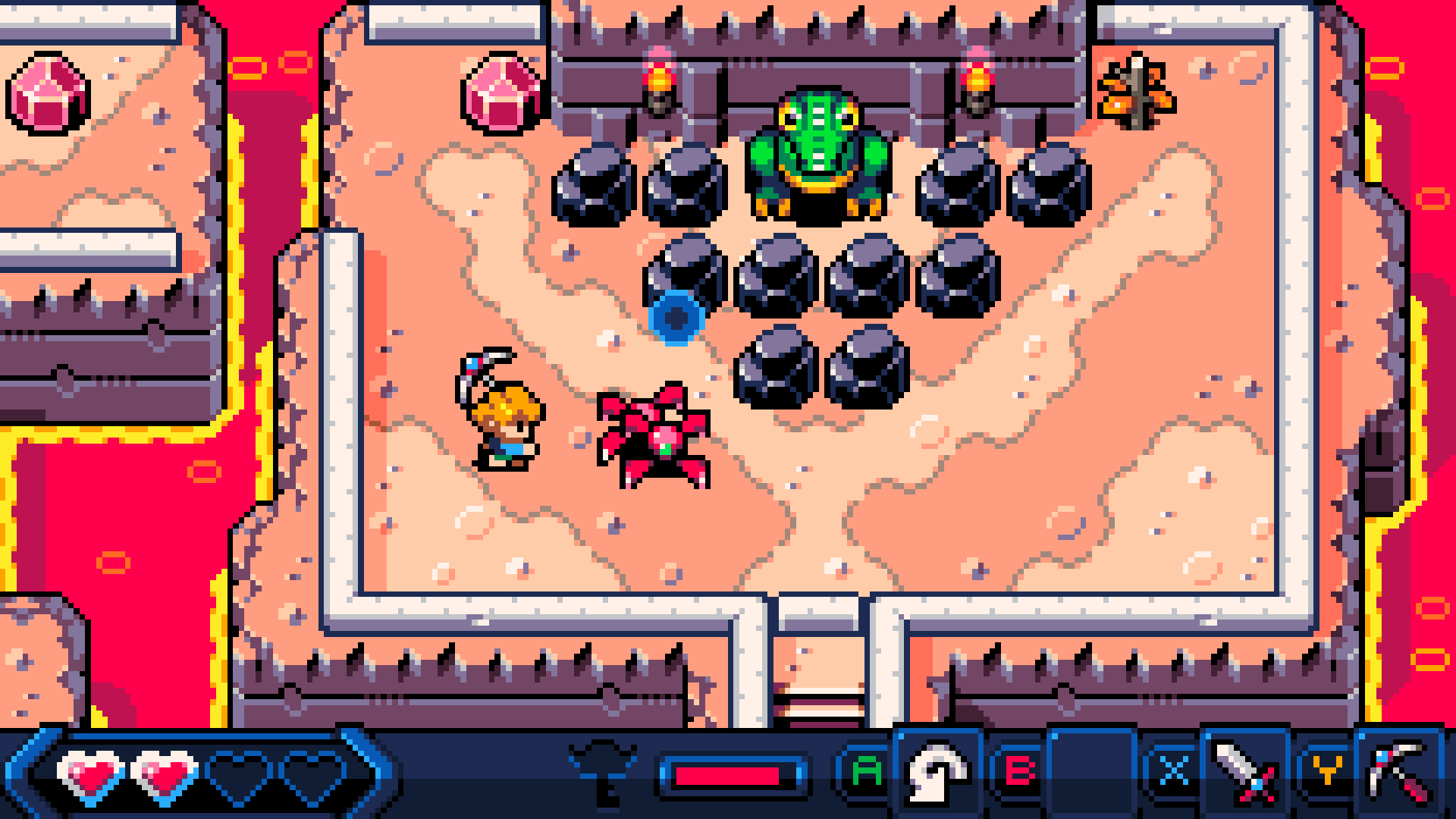
Luckily the game’s tools are surprisingly fun to use. The pickax packs a real punch when swung at enemies instead of your sword. It has a slow windup as well, which makes using it as a weapon a bit tricky to master. Then the way the pickax enables you to volley projectiles back at enemies is a nice touch. The grappling hook is capable of shooting all the way across the screen from the moment you acquire it, which feels generous. It also just feels great to use, whether for mobility or as an offensive weapon; it’s probably the most satisfying element of the game.
Visually, Castaway is genuinely delightful, and its graphical style resembles a GBC game, though I assume the animations are more detailed than the handheld could have managed. The walk cycle for our hero Martin, for example, looks so good, I got distracted by it at one point and walked straight into some spikes. The dinosaur-like reptile bosses each look cute and menacing simultaneously. And I really like how the escape pods shown in the opening cinematic appear to be a direct reference to Dragon Ball Z.
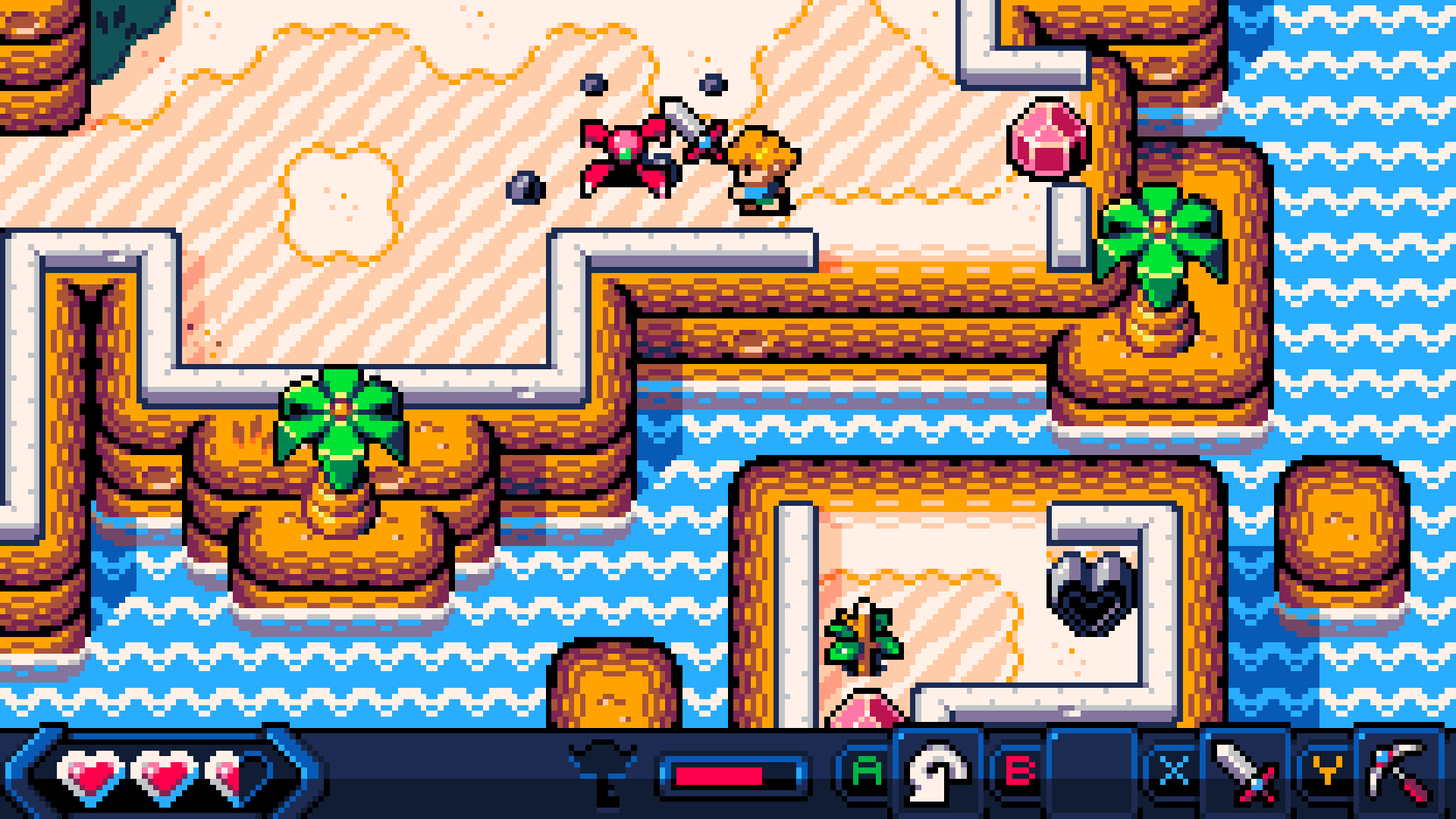
On the audio side, there is also a lot to like, but one or two choices bothered me quite a bit. First up, there is a triangle sound that gets played in the island overworld music that is so terribly high-pitched and grating, I misinterpreted it for a warning alarm. When I first heard it, I honestly thought my health must have dropped to one heart or something. That’s just a bad sound to include in your main overworld music. In a second example of the same problem, any time you hit a crystal with your sword, it produces a painfully high-pitched, tinkly sound effect. This might have been the exact same sound from the overworld music, it certainly bothered my ears in the same way. Maybe devs should try to steer clear of those upper register notes? I don’t know.
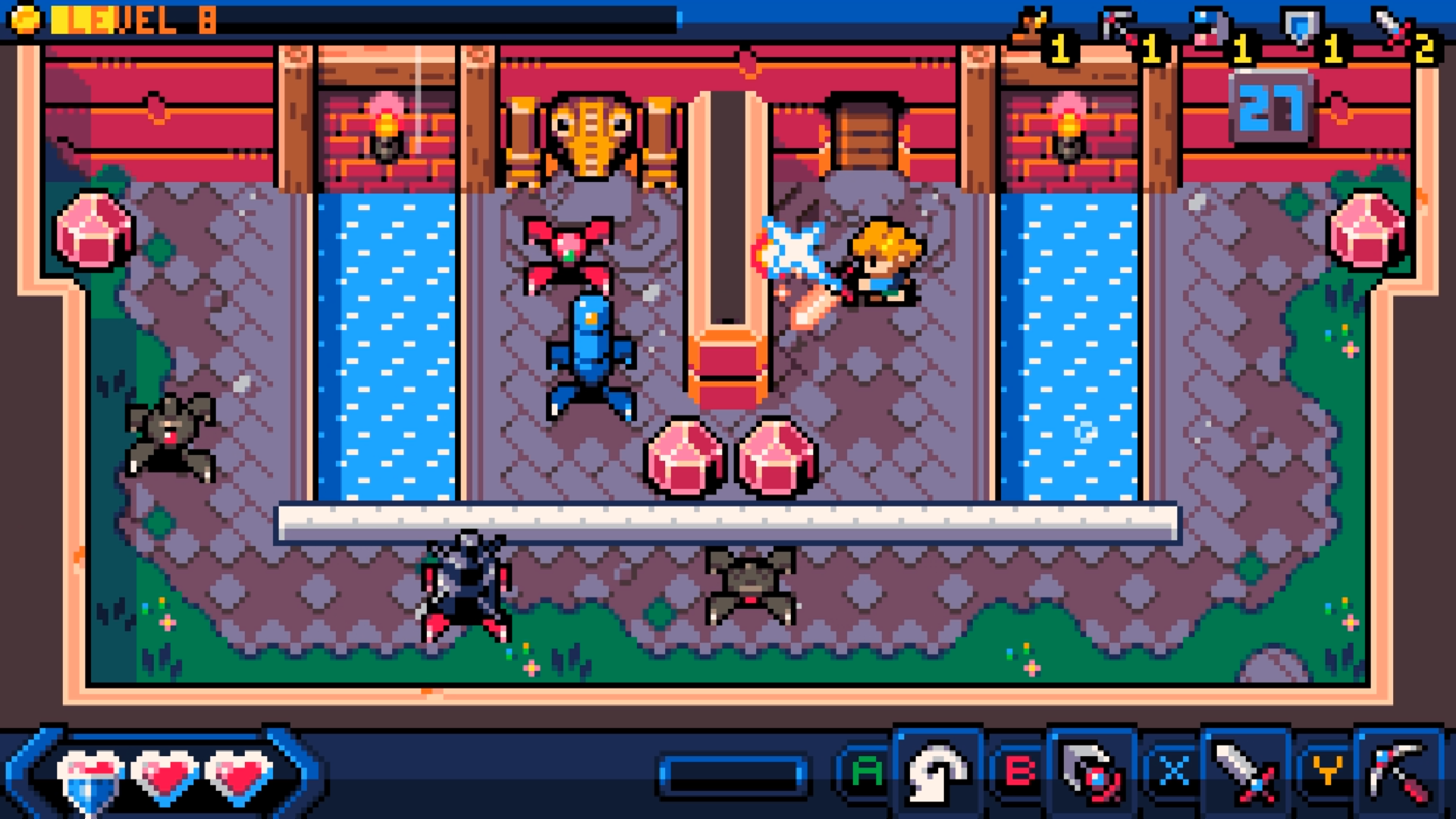
Once the Island adventure has been completed, players can tackle the Tower mode for an additional challenge. From the very beginning the game reduces Martin’s (the hero) health to two hearts, making it clear that you won’t make it very far if you make mistakes. Then you enter a room and have to clear out all of the enemies in order to move on to the next.
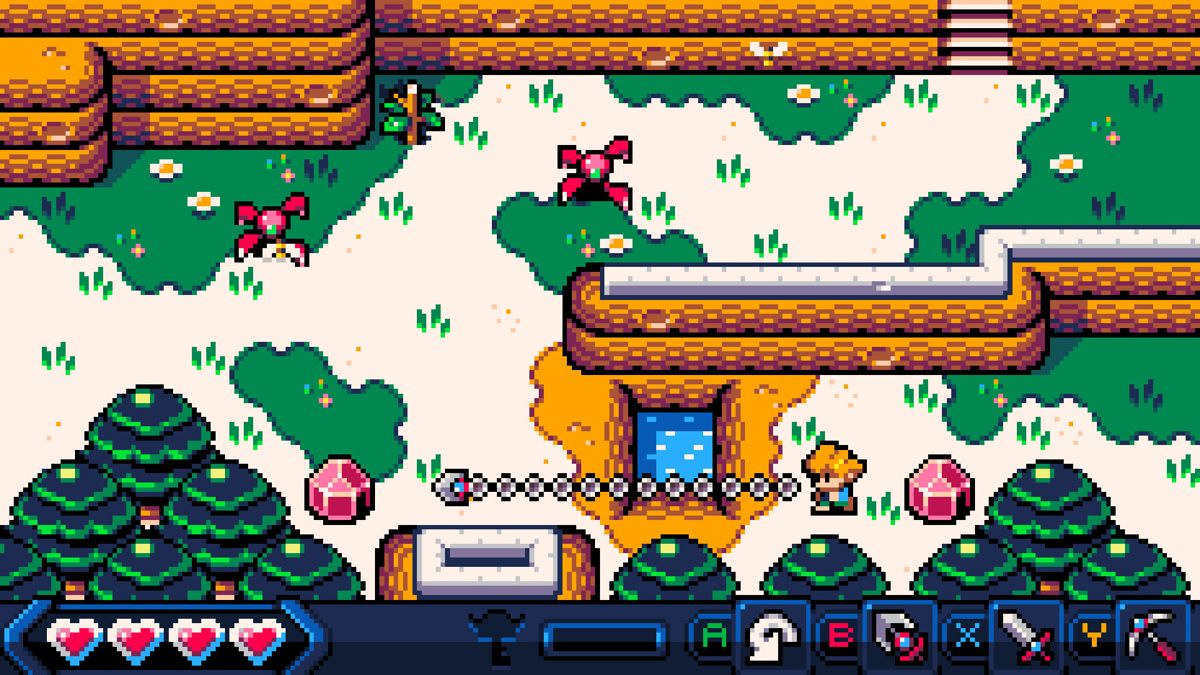
Fallen enemies in the Tower drop gold coins for you to collect, though they will disappear after a short time if left untouched. There is a gold meter at the top of the screen that produces a power-up selection screen when filled up, allowing you to select one of three random buffs.
My first time trying the Tower mode, I made it to floor 23 of 51. The next three times I tried to play it, I didn’t actually make it past floor 3. The multiple room/floor structure of this mode reminded me a lot of the Trial of the Sword DLC content for Zelda BOTW. However, while I felt compelled to conquer all trials in BOTW, I don’t think I feel the need to master Tower mode here. The reason I picked up Castaway in the first place was to experience a breezy throwback to classic Zelda. I’m not looking to prove my gaming competence with this particular title.
All things considered, I enjoyed playing Castaway enough to recommend it. As long as you’re expecting a super short, bitesized adventure—one that you can easily complete in one sitting—I doubt you’ll be disappointed. If eight bucks feels a little steep to you, maybe just wait for it to go on sale. The game is quite charming and beautiful to look at, and pretty much everybody loves the game it is emulating (Link’s Awakening). Plus, you know what they say: “Brevity is the soul of wit.”