
Playdate game reviews: Round 3
We’re back with another round of Playdate game reviews! Again, this will be a larger post of mini-reviews. Small games, small reviews; you know the drill. Ok then, let’s dive into Round 3.
What The Crow?!
What the Crow?! is bitesize 2D platforming game where you play as an angry little crow out for revenge. Made by Lumi Creative, WTC is partially a puzzle platformer and partially a stealth action game—perhaps we could call it a stealth puzzle game?—where the goal is to destroy as much property as possible without getting caught.
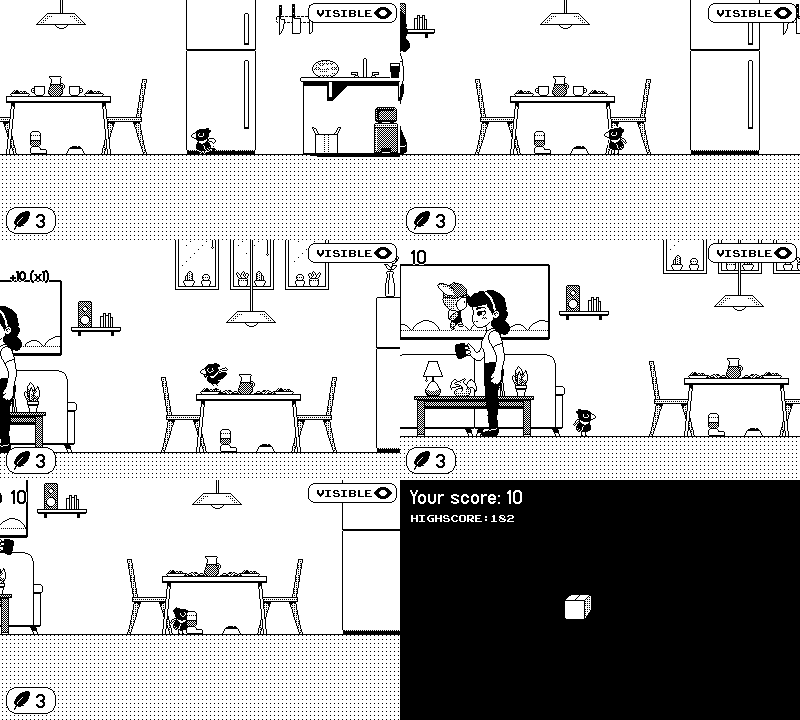
Being spotted by a human will usually result in instant defeat. This is because people in this game have a preternatural ability to throw a cardboard box with unavoidable accuracy and catch any target bird (i.e.; you) inside of it. Seriously, it’s like these thrown cardboard boxes are heatseeking missiles. A crow’s best bet is to hide behind large enough objects when any humans lazily stroll by their position.
The A Button makes you jump and/or flap your wings to fly. However, your flight ability is limited by the number of feathers you can collect during your run. Each feather gives you one more flap of your wings, which is essentially like having a double-jump (2 feathers), triple-jump (3 feathers), and so on. Moving through the air is much faster than walking along the ground of course, so collecting these feathers also helps you traverse the environment a lot faster as well.
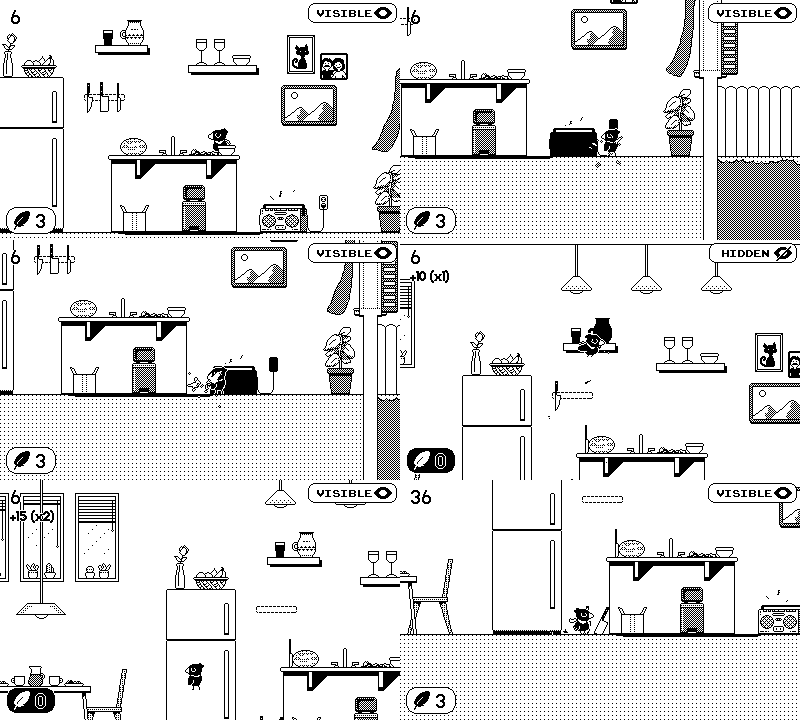
The B Button makes you perform a wing slap, the crow’s version of a punch. Use wing slaps to break any and every object you can interact with. Oftentimes it will take a couple slaps to break things, so feel free to go nuts.
As a stealth game, it turns out that finding tall enough objects to hide behind in WTC is the key to success. While your goal is f#*£ up every last object in sight, it’s best to save your hiding spots for the final bits to face destruction.
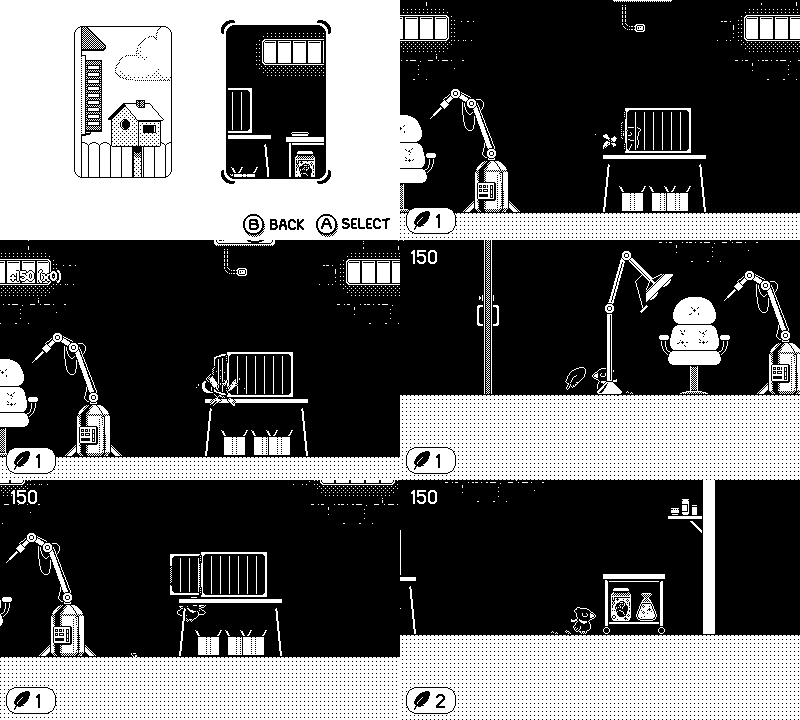
Visually, this game is a real charmer. The pixel art basically pitch perfect, with your crow protagonist and the human enemies lovely rendered in appropriately cartoony glory, and pretty much all of the objects and environments being perfectly readable. In my opinion, the visual consistency of the pixel art is the glue that really holds the game together.
The main criticism to level at WTC—and something I probably should have brought up sooner—is that the game is terribly short. And by “terribly short”, I mean that there are just two levels in the entire game.
Apparently when it was first released, WTC had only a single level to play. Granted, the game is only $4, and that first level is so fun, I could see it being considered a game unto itself. However, when charging money for a game, there really needs to be a minimum level of content on offer to justify the purchase. A game with just one or two levels isn’t going to cut it for most players. For me, I thought the game was definitely fun enough to justify the cost of a cup of coffee to buy it. And I’ve enjoyed it so much, I secretly hope a third level could be added one day…
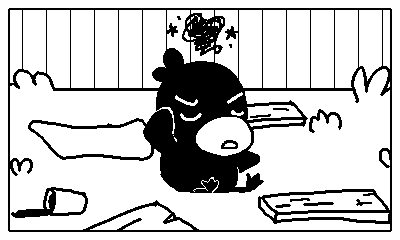
Look, I must admit that I genuinely love What the Crow. This is a new favorite, probably one of my Top 5 games on the Playdate. It’s an action game, it’s a puzzle platformer, and it’s a stealth game—it’s as if this one was made for me personally. I only wish there was more of it to enjoy.
Ouroboros
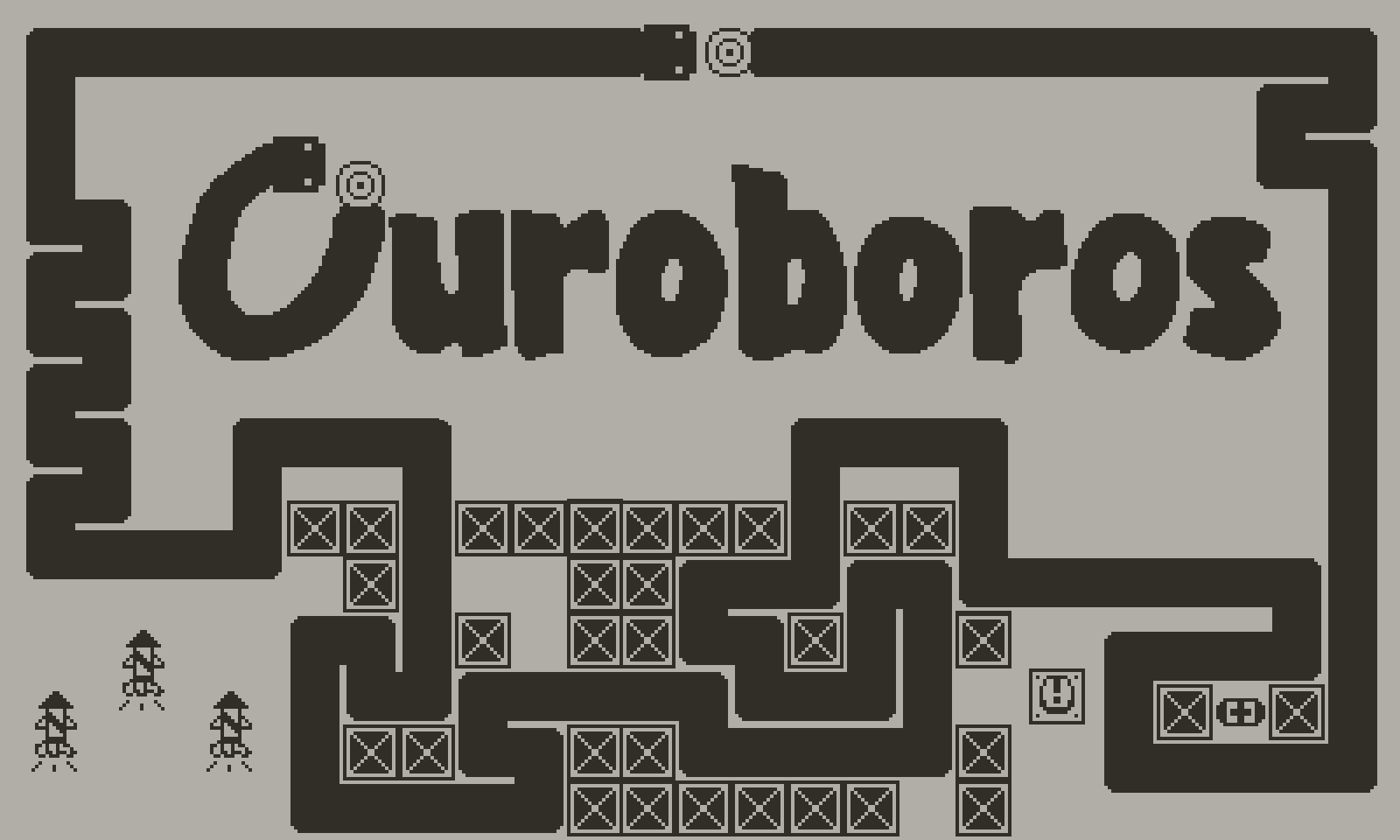
Ouroboros is another take on the classic game Snake…or is it? The twist here is that your goal is actually to have the snake bite its own tail, which is already a big departure from the classic cellphone game you’re most likely familiar with. But more importantly, the style and pace of play here is completely different.
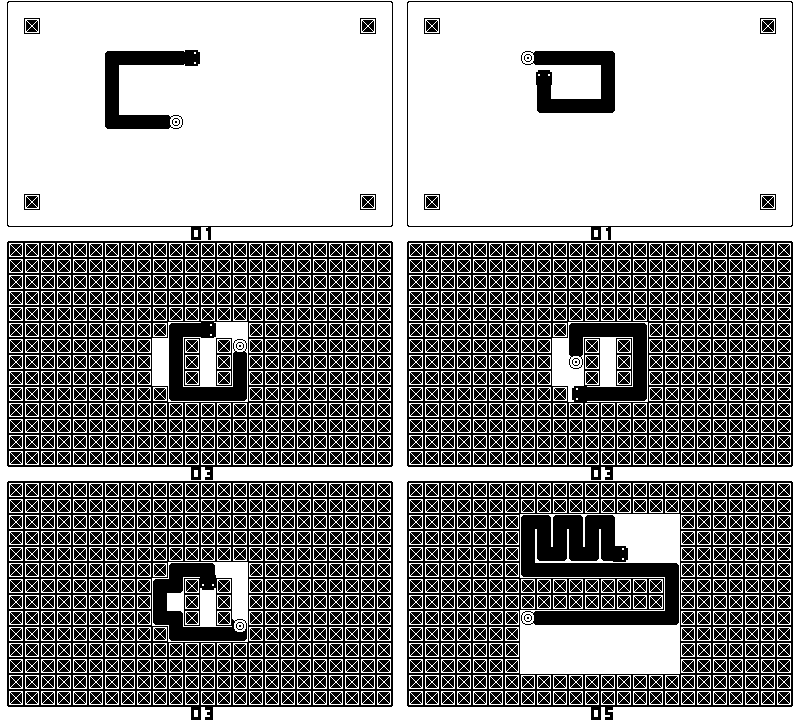
Instead of your snake constantly slithering forward—needing to be turned left or right to avoid colliding with the stage boundaries or its own body—the Ouroboros snake only moves one tile at a time as directed by the player. Every move is a deliberate choice made one at a time. It’s not possible to collide with the walls or the snake’s body. In fact, by pressing the B Button you can reverse your last move, going all the back to the start of the level if you’d like.
The structure of Ouroboros feels much more like a traditional puzzle game than Snake. There can be several obstacles to get around in order to set up that head-to-tail victory condition, and finding the right path involves a good deal of trial and error. Instead of difficulty increasing because you have to avoid crashing as the game speeds up, the pace of this game is far more methodical and step-by-step.
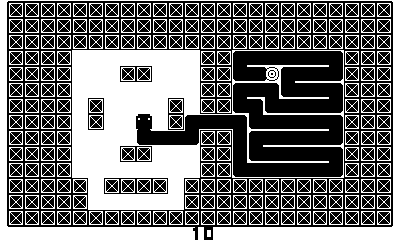
Instead of Snake, I think the game genre Ouroboros most accurately represents is Sokoban—the block-pushing puzzle game. The deliberative, step-by-step nature of the gameplay, solving a puzzle in a top-down perspective; it’s Sokoban with a snake’s body in place of boxes. If the devs didn’t already have the perfect title, they could have called it “Serpentoban”. Or perhaps with its rigid grid-based gameplay style, they could have called it “Solid Snake”? (Nah, Serpentoban is still better.)
There are 50 levels to puzzle through in Ouroboros and four save slots available to store your progress. Luckily you can attempt any level you want at any time and don’t have to complete them in order. This is great in case (like me) you get stuck at Level 10 and basically give up hope of ever clearing that particular puzzle. I nearly stopped playing at that point, which would have meant missing out on the majority of the game’s charm.
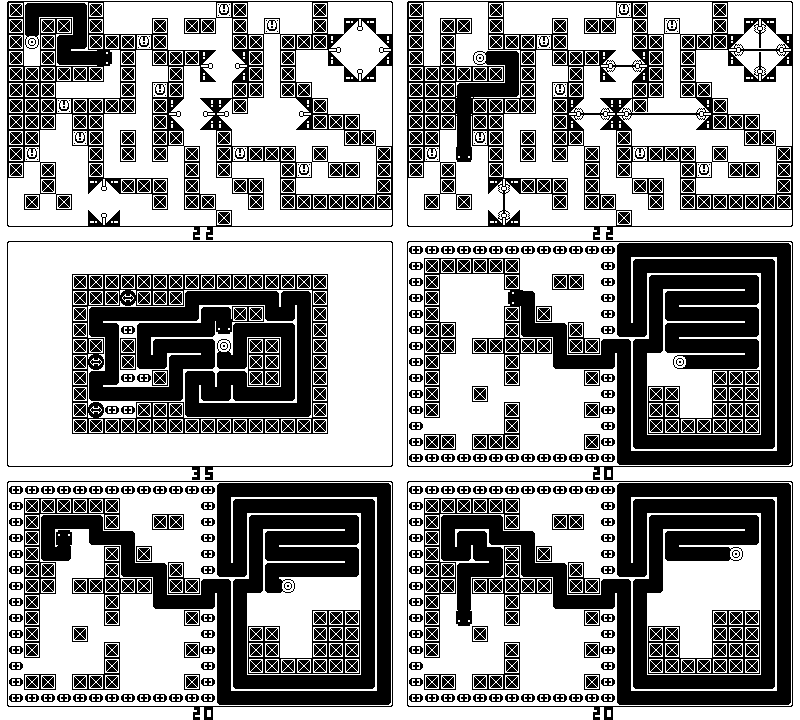
New gameplay elements start to be added after the first set of stages. At Level 11, for example, there are items your snake can roll over to extend its body’s length. At Level 21, laser traps are added that, when triggered, can cut the snake into pieces. At Level 31, there’s a new item that reverses the snake's direction, swapping the locations of the head of the tail. And Level 41, there are rockets which will fly the direction your snake pushes them and explode on contact, destroying a chunk of the level in the process.
All in all, I think Ouroboros is a clever little puzzle game and certainly worth your time. Assuming, that is, you know what game you are getting. This game is far more Sokoban than Snake.
Totally Safe Jump Enhancement System
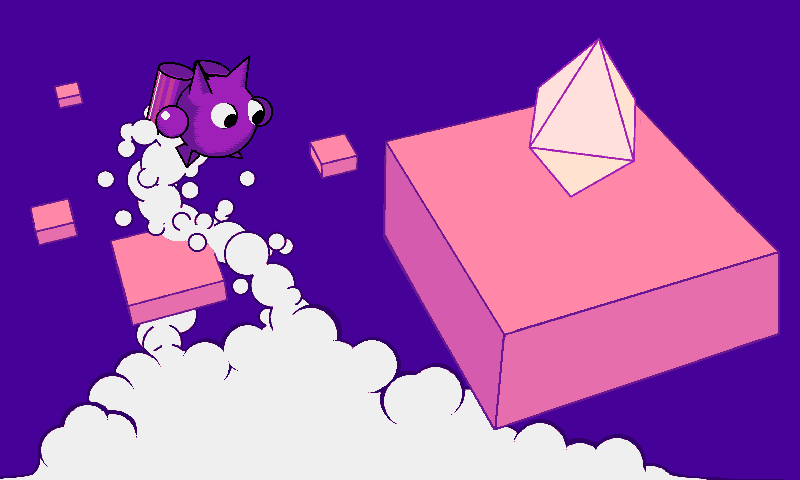
From the moment I saw a clip of this game in action, I knew I had to play Totally Safe Jump Enhancement System. It’s a weakness of mine; I just can’t resist a 3D platformer, even one put on comically underpowered hardware.
And I wish I could say this game really scratched that 3D platformer itch for me…but it didn’t. Unfortunately while TSJES looks amazing, the gameplay isn’t particularly fun.
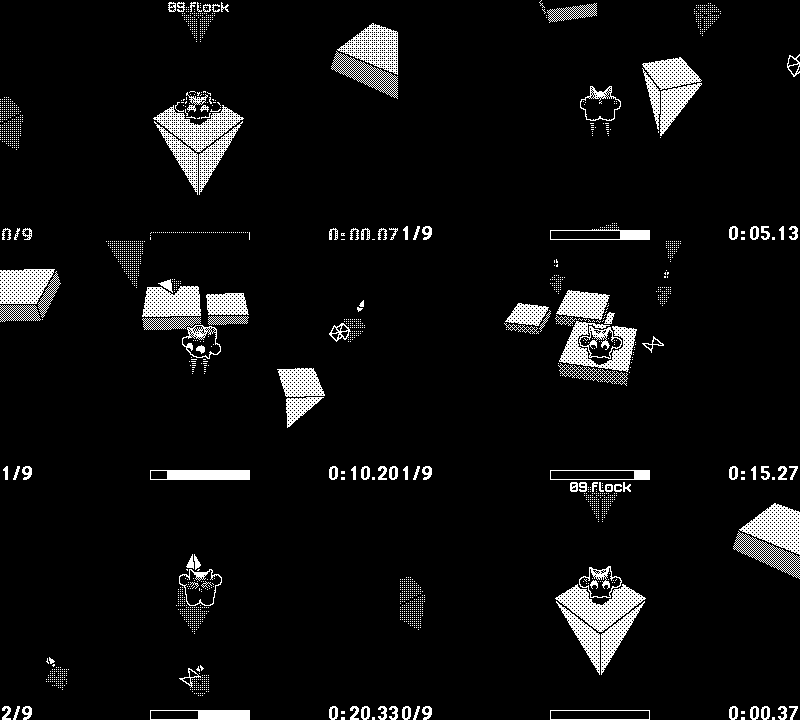
You control a little blobby, cartoon mascot-looking dude with a jetpack, guiding them through levels consisting of small platforms floating in an open void. Your goal is to collect all the gems in the level, and this necessitates hopping from platform to platform without falling to your doom. The world appears to be rendered in 3D polygons, with some elements certainly making clever use of 2D sprites. Your little dude is always in the center of the screen, with the camera always at the player’s back, tilted at a downward angle from above. As you turn, the camera rotates to be directly behind the player’s back. This serves to always give you a view of the direction in which you are headed.
The jetpack allows your guy to jump higher and farther than his stumpy legs alone could manage, but that’s about it. This jetpack doesn’t allow flight—or even hovering, really—it’s merely a “Jump Enhancement System” as referenced in the title. So don’t expect you little dude to soar like The Rocketeer or anything. If that wasn’t deflating already, the jetpack also has extremely limited fuel. So while you’re collecting gems, you will also need to collect fuel pickups to keep your jetpack functional.
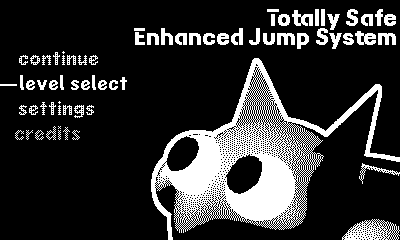
Now I think this premise, while obviously quite constrained, could still make for a decently fun time. But that’s somewhat of tall order, seeing as how the game’s setup combines many negative elements of early 3D platformers into one package. The camera’s downward angle is great for seeing the next platform you’re about to land on, but not much of anything else. It would’ve been nice to have some kind of free-look option, even if it were just a simple panning camera.
The controls are quite fiddly and difficult, requiring some fine-tune precision in order to execute properly. Steering left and right is controlled with those directions on the D-pad or by using the crank. The main action of firing your jetpack can be triggered four different ways: the A Button, the B Button, pressing Up on the D-Pad, or Down on the D-Pad. Should you choose to play this game without using crank controls, you will almost certainly trigger your jetpack by pressing Up or Down on accident.
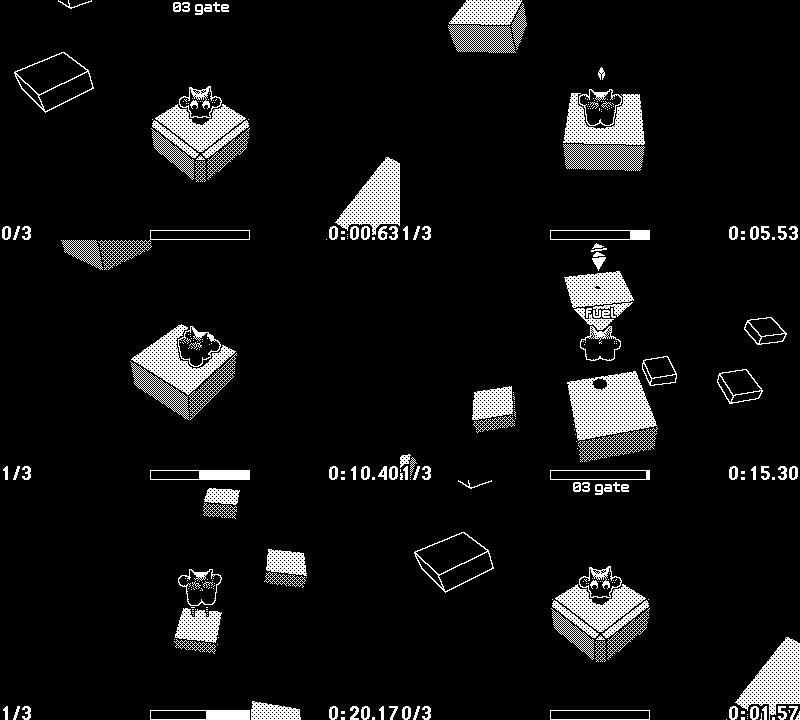
But it’s the limited fuel mechanic that adds insult to injury. Running out of fuel and in the middle of a level just makes the moment-to-moment gameplay frustrating. While TSJES is a 3D platformer, it’s also something of a puzzle game. The puzzle here is figuring out how to collect all the gems before running out of fuel. Even with fuel pickups strategically placed in each level, the fact that it is so limited makes the game genuinely difficult. In fact, I think it is just a little too hard to stick with.
Similar to its gameplay, the little jazz tune used as background music in this game is pretty fun at first. As time passes, however, it starts to wear out its welcome. Luckily you can easily toggle the music off from the pause menu.
Totally Safe Jump Enhancement System is a great technical showcase, but I simply don’t enjoy how it plays. To me this feels like more of a tech demo than a complete game.
Carve Jr.
From Chuhai Labs, makers of Playdate Season 1 game Whitewater Wipeout, comes another crank-controlled extreme sports title. But this time, it’s a lot cooler… Carve Jr. is a downhill snowboarding game played with the crank.
The founder of Chuhai Labs, Giles Goddard, was a key programmer at Nintendo during the N64 era and, notable to this discussion, was the creator of 1080 Snowboarding. So it makes sense that he would return to snowboarding games at some point. Apparently this game is officially a prequel to the Quest VR game Carve Snowboarding, hence the “Jr.” part of the title.
The first image shown after the title screen is a QRcode to scan for instructions on how to play the game. It’s a bit like a modern, digital instruction booklet, but in this case short enough to be a one-pager.
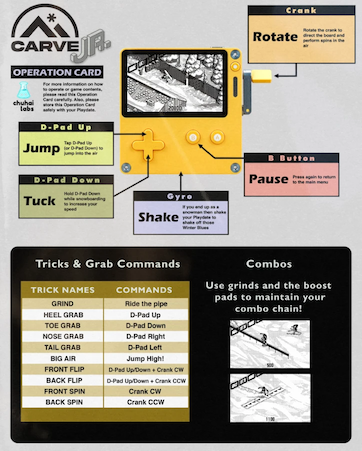
Basically you use the crank to steer and spin your snowboard. When airborne, cranking different directions can perform different tricks. The D-pad is used to Couch (D-pad Down) and to Jump D-Pad Up). Pressing directions on the D-Pad while in midair will result in four different grab tricks, adding to your combo chain.
So the gist of Carve Jr. is that you control a snowboarder making a run down a mountain, with various jumps, rails, obstacles, and slow-moving skiers in your path. Your goal is to perform as many tricks as you can (360’s, grabs, rail grinds, backflips, etc.) to achieve the highest score possible. If you land multiple tricks in quick succession, you can start a combo chain, and multiply your points the longer the chain remains unbroken. Riding over “boost pads” will also maintain your combo chain. Take too long to link together tricks, or crash out, and your combo chain will be lost. This system of trick scoring should feel familiar to people who have played games like Tony Hawk’s ProSkater…so pretty much everyone.
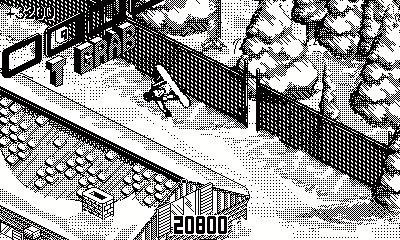
Visually everything is presented rather clearly with an isometric perspective and some very good-looking pixel art. Sound quality is equally impressive, with some surprising chill lo-fi beats for music. While I definitely didn’t recognize his voice, I did think the mugshot of the game’s commentator—cheekily named “Carve Edgerton”—looked an awful lot like comedian/internet personality Michael Swaim. I was mostly familiar with Swaim through his video work with Cracked.com, and subsequent video productions made under the Small Beans banner. He makes good stuff!
Gameplay-wise, Carve Jr. feels pretty good. Using the crank to steer actually feels much more intuitive to me here than it did with Whitewater Wipeout. Whether that is due to snowboarding working better than surfing in this context, or Whitewater Wipeout literally being the first Playdate game I ever played, is hard to say. But I definitely enjoy Chuhai Labs’ snowboarding game more than their surfing one.
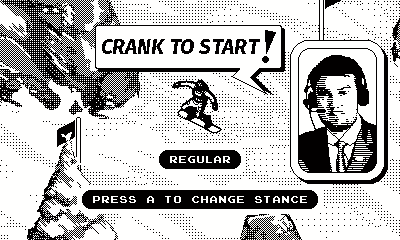
Yep, that’s Michael Swaim alright.
Perhaps this is just me being nostalgic, but this game feels like a modern, polished version of SkiFree. All it needs now is a yeti that runs up out of nowhere and devours you whole.
Carve Jr. is an easy game to recommend. It delivers slope-shredding gameplay, beautiful pixel art visuals, excellent tunes, and all the features one might expect, packed into a Playdate-sized package.
Be Kind To Yourself
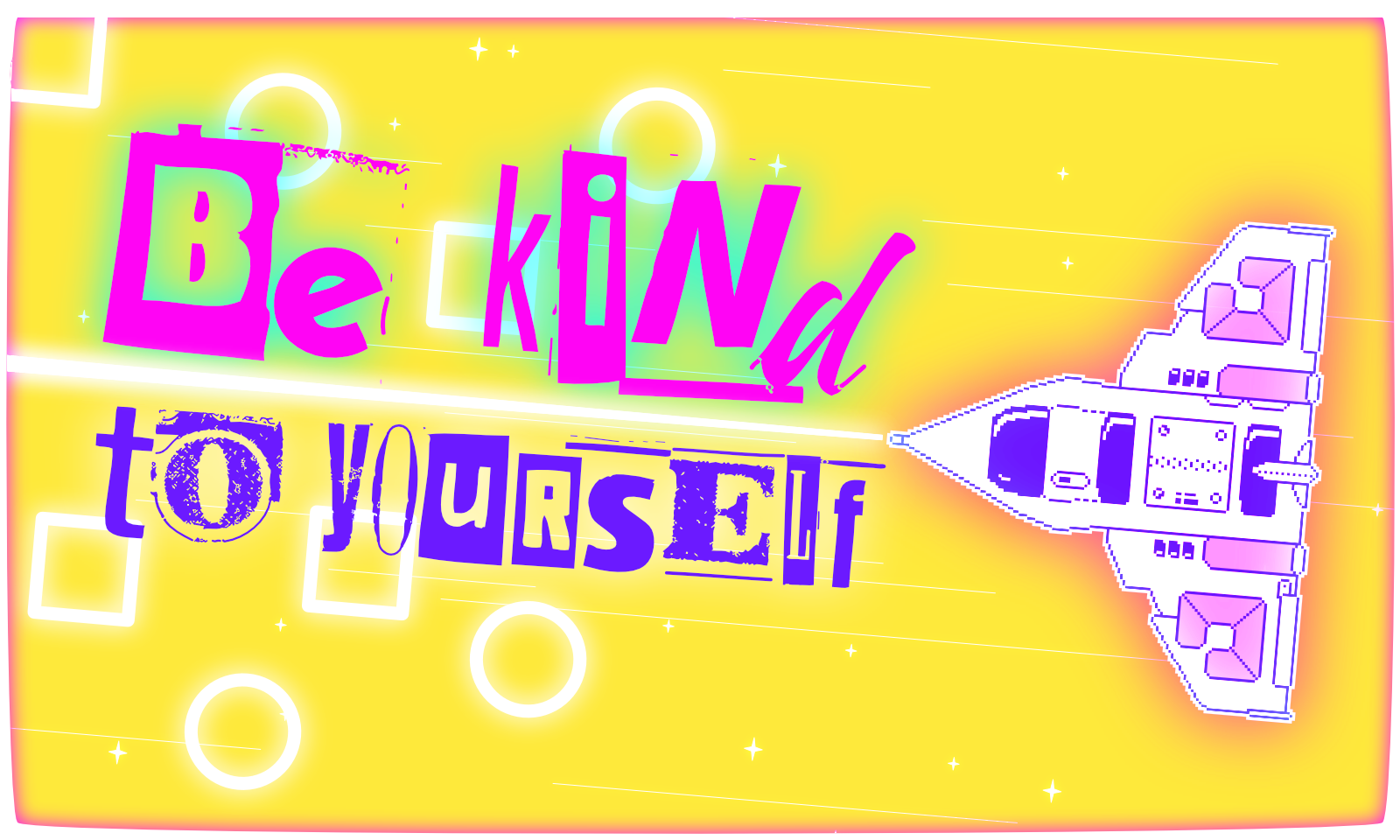
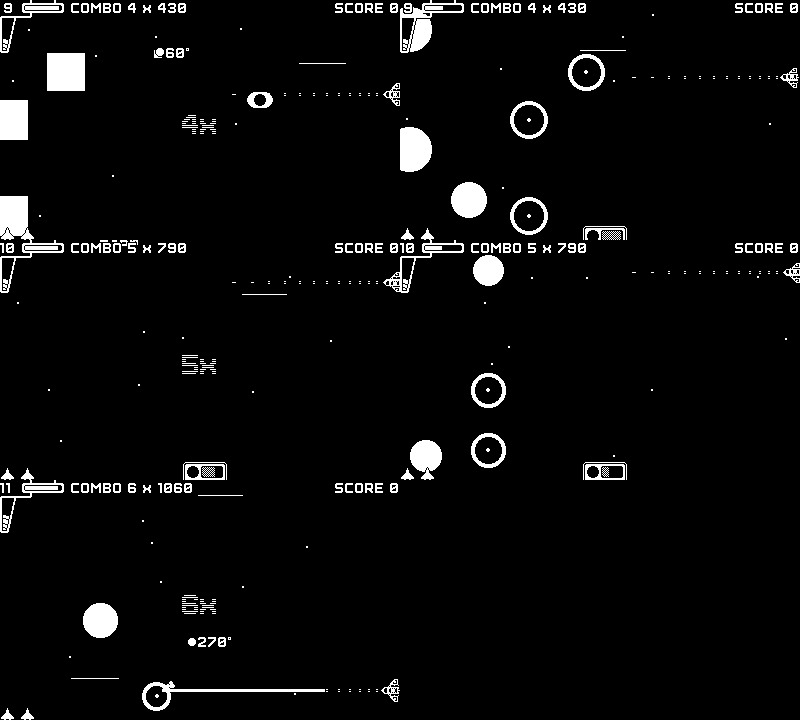
Be Kind To Yourself is a horizontal shooter game where you target geometric shapes in space. It’s a bit unconventional, as illustrated by the fact that the targets move left to right and your ship is oriented on the right-hand side of the screen. It also has a combo and scoring system that genuinely breaks my brain.
The game’s catalog page says that BKTY “looks like a shmup but plays kinda like a falling block puzzle game”, which was definitely a line that caught my attention. Because while I am a casual enjoyer of shoot’em ups at best, I absolutely love falling block puzzle games! (I genuinely consider Tetris to be a perfect video game and have been fully addicted to Dr. Mario for over a decade at this point.) So this description sounded right up my alley.
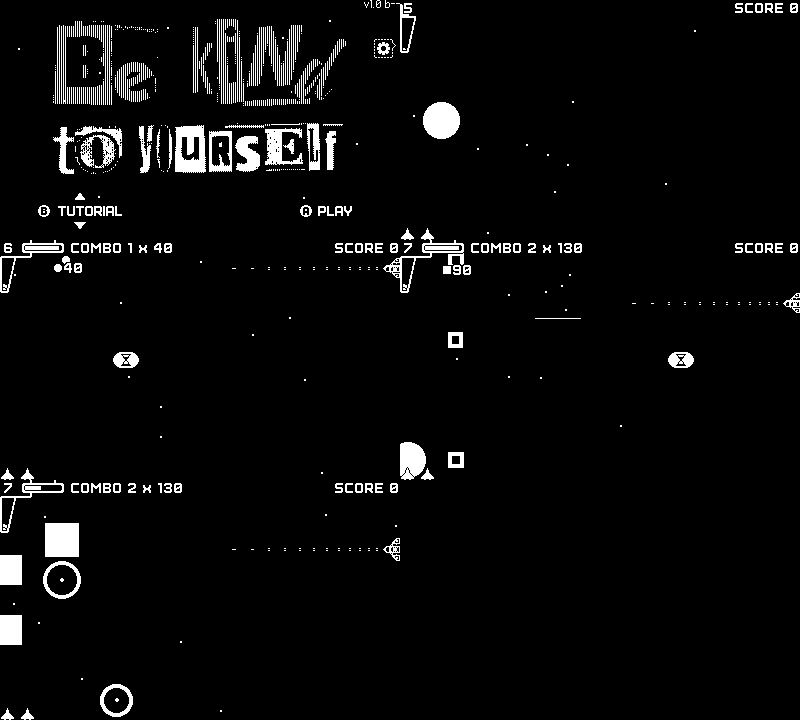
The thing is though, while BKTY’s mechanics certainly feel like a shooter, I don’t think it feels much like a falling block puzzle game to me. Geometric shapes—called “hyperstones”—float towards your side of the screen and you want to clear them before they hit the edge, or collide with your ship. There are circle hyperstones (○) and square hyperstones (□). There is also the occasional moving triangle called a “Space Owl”, but don’t worry about that for now. Shooting a hyperstone once with your laser will highlight the object, and then shooting it a second time clears the highlighted object from play. If you shoot multiple hyperstones once before hitting one of them for a second time, you will clear multiple objects at once.
The puzzle element of BKTY’s combo system comes into play with how you clear groups of hyperstones. You are supposed to clear your targets in groups of the same shape, or in groups with the same number of both shapes. So you could clear two circles (○○) or clear two squares (□□) to get some points. Or you could clear a pair of circles together with a pair of squares (○○ + □□) for more points. As long as you are clearing the same number of squares and circles at the same time, that should work out and you can extend your combo. However, if you were to clear two squares and a single circle (□□ + ○) you would be dinged for doing things asymmetrically and your combo would end.
Unfortunately if you fail to do things correctly then BKTY’s scoring system doesn’t just not give you more points, it actually deducts points from your score. Mistakes actually result in getting negative points, which means your final score is quite likely to be less than zero. Seems a bit harsh, doesn’t it? Oh, but also if you clear hyperstones to the beat of the music then that apparently gets you bonus points…or so I’ve read.
Are you following this so far? Does everything make sense? Personally I found the game mechanics to be pretty obtuse and unintuitive, so I definitely checked out the in-game manual and tutorial for guidance. After being educated on how everything works, I still find the game fairly difficult to handle in motion. This is a pretty intense game, even if it is a puzzle-flavored shoot’em up.
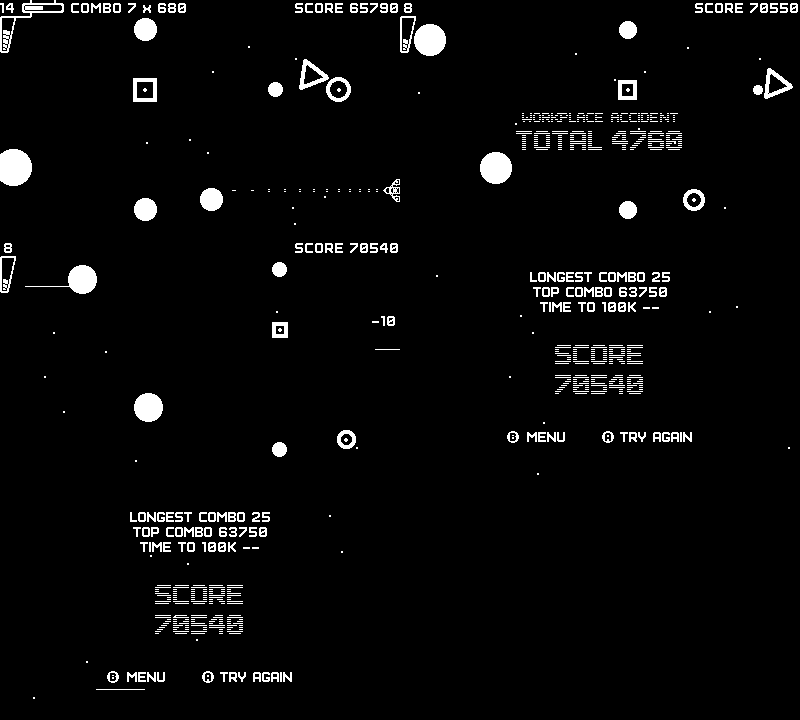
Visually the game looks nice and clean, with especially impressive UI design. The animation that plays when you launch the game is one of cooler touches I’ve seen on Playdate. This music is also really good, providing a fine beat for the shooting gameplay. So aesthetically, everything is more than adequate.
In terms of gameplay though—and particularly in regards to the combo mechanics and scoring system—I don’t think this is my cup of tea. Be Kind To Yourself is genuinely unique and I’m sure there are players out there who will really appreciate its style, but I simply can’t get into it.